Naked Stretching Workout Habits that Expose where Stress Lives in Your Body.
Stress is not just a thought. It is a physical pattern. It sits in the jaw that clenches without permission, the shoulders that ride up while you answer emails, the hips that feel tight even after a full night’s sleep. Most people only notice stress when it becomes pain, but your body has been signaling it long before that.
That’s why a naked stretching workout can be so revealing. Not because nudity is the focus, but because it removes distractions and makes sensation clearer. When you stretch without clothing, you feel your breath, tension, and alignment more directly. You notice where you grip, where you avoid, and where you compensate. Over time, these habits become a quiet map of where stress actually lives in your body.
This post breaks down simple stretching habits that highlight stress patterns, how to interpret what you feel, and how to use longer, guided sessions to reset your system instead of just “loosening up” for a moment.
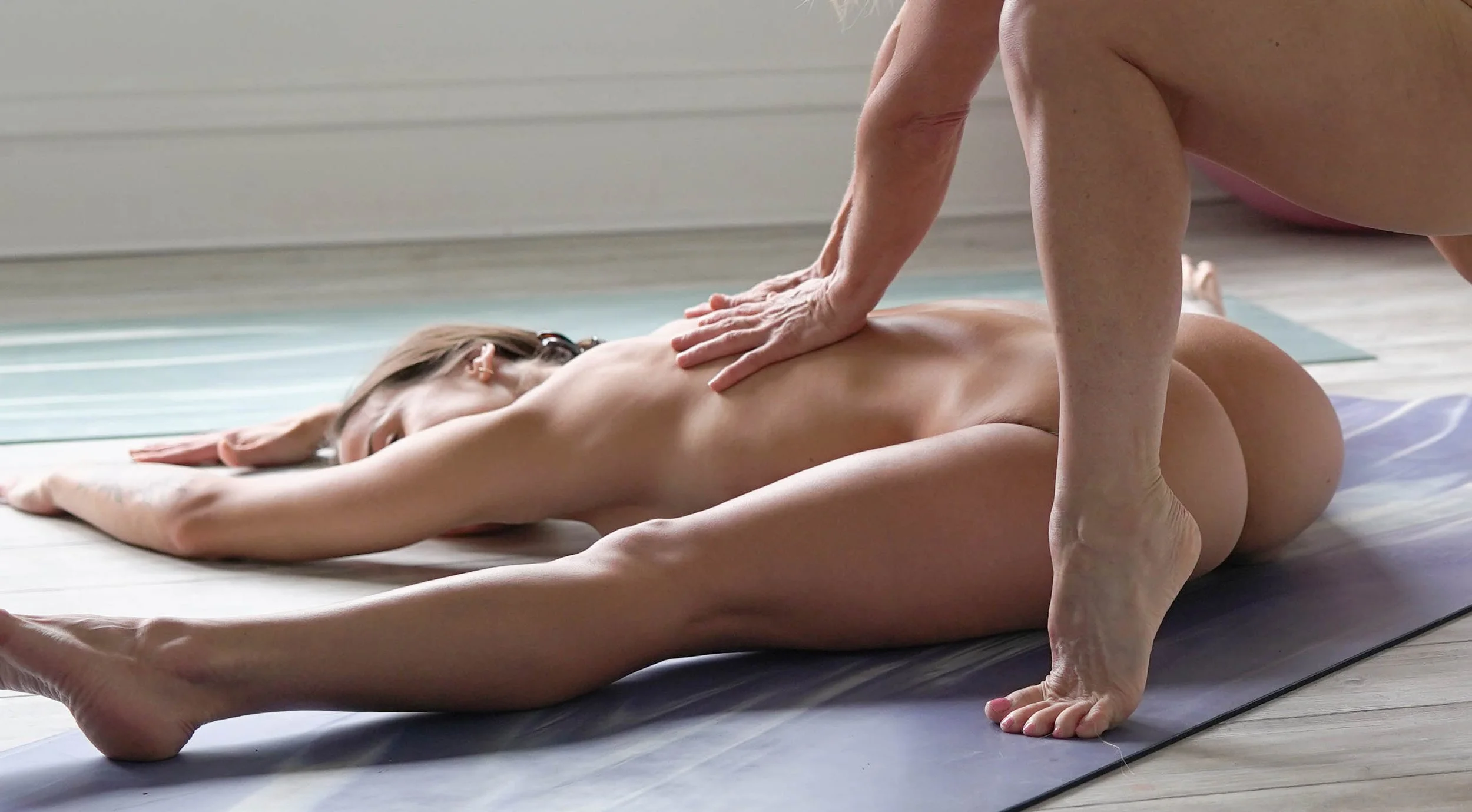
Why stretching exposes stress better than most workouts
High-intensity workouts can distract you from tension because effort becomes the main sensation. Stretching is slower. It gives your nervous system room to speak. When you hold positions and breathe, your body reveals what it has been carrying.
A consistent naked stretching workout also removes the small sensory interference of waistbands, tight seams, and fabric heat. Those things are not huge, but they do blur feedback. Less clutter means more accuracy.
If you want the clearest read on your stress patterns, Instructor-Led Naked Yoga and guided mobility sessions are especially helpful because good cues pull attention into the exact areas where people usually disconnect.
The habit that changes everything is slowing down your entry
Most people rush into stretches and then wonder why nothing changes. Stress lives in guarding, and guarding does not release on command. The first habit that exposes stress is slowing down the entry into each position.
When you move into a stretch gradually, you notice the exact moment your body resists. That moment is usually not about flexibility. It is about protection. It shows where your nervous system thinks it needs armor.
In Full-Length Nude Yoga Classes, this happens naturally because the pacing is built for downshifting. A longer practice gives your body time to stop defending and start softening.
Breath mapping shows where your stress is hiding
Your breath will always expose your stress faster than your thoughts. Try this habit during any full length nude yoga video or Flexibility & Stretching Videos session.
As you enter a stretch, notice what your breath does.
If you hold your breath, that is stress.
If you shorten your exhale, that is stress.
If you breathe only into the chest and avoid the belly, that is stress.
Now connect the breath pattern to the body area. Many people discover they stop breathing smoothly in the same spots every time, like hamstrings, hip flexors, chest openers, or neck stretches. That consistency is the clue. Those areas are not just tight, they are loaded.
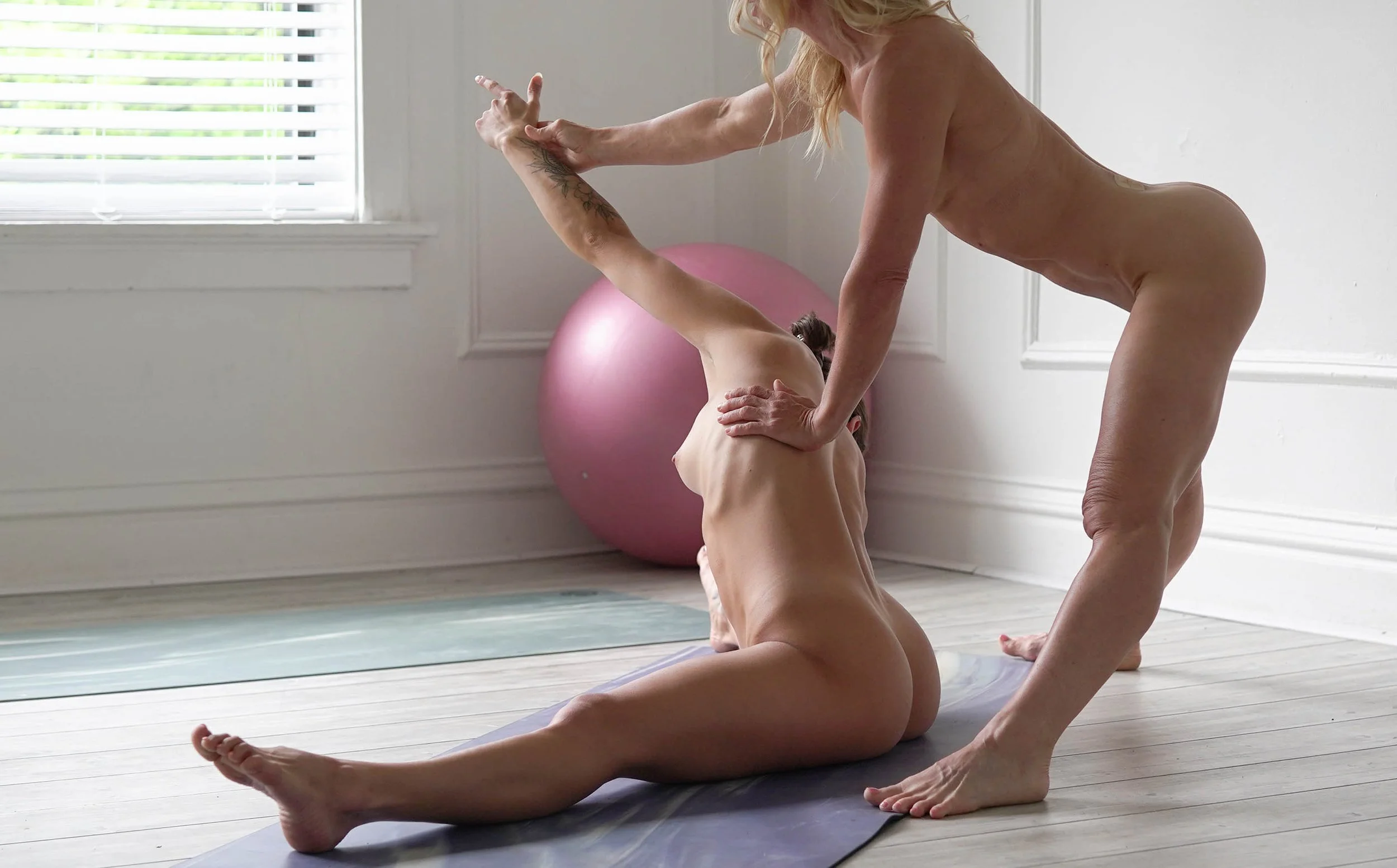
The jaw, neck, and shoulders are stress storage units
Even people who say “my back is tight” often have the real root higher up. Stress commonly lives in the jaw, neck, and shoulders because that is where your body prepares for conflict, pressure, and performance.
Habit: soften the jaw before every upper-body stretch
Before you stretch the neck or shoulders, unclench the jaw and let the tongue rest. This sounds small, but it changes everything. A tight jaw often keeps the upper body braced.
This is one reason yoga with talking instructors can be powerful. Good instructors remind you to relax the face and throat, which many people forget even in quiet sessions.
Habit: stretch the chest slowly, then reassess shoulder tension
Shoulders that feel “tight” are often trying to stabilize a collapsed chest or rounded posture. Slow chest opening can expose that pattern immediately. If you feel your shoulders fighting the stretch, you’ve found a stress habit, not just a flexibility issue.
The hips reveal emotional stress and lifestyle stress
Hips are complicated. They hold physical stress from sitting and emotional stress from chronic bracing. You do not need mystical explanations to understand this. Your hips stabilize your posture all day. When life feels uncertain, the body often tightens the hips to feel grounded.
Habit: treat hip stretches like a conversation, not a battle
In a naked stretching workout, hip stretches often feel intense because you cannot distract yourself. Instead of pushing deeper, use smaller movements and longer exhales. Notice where you want to escape. That urge to escape is the stress response.
Habit: test both sides and look for asymmetry
Stress patterns are rarely symmetrical. If your right hip opens easily and your left feels guarded, your body is telling you where it has been compensating. Track that over weeks rather than trying to “fix” it in one session.
Hamstrings are where mental urgency shows up
Hamstrings get tight for many reasons, but stress adds a specific flavor: urgency. People who are mentally switched on often stretch hamstrings like they are trying to complete a task. They force. They rush. They hold tension in the face.
Habit: do less, hold longer, breathe slower
A slower hold exposes whether the hamstrings are truly tight or just defended. If you feel shaking, gripping, or breath holding, that is your stress pattern showing up.
This is where On-Demand Fitness Streaming is useful. You can choose slower sessions repeatedly, and repetition is what trains the nervous system to release instead of brace.
Your low back may not be the problem, it may be the messenger
Many people think stress lives in the low back because that is where they feel it. But the low back often reacts to what is happening in the hips, hamstrings, and core.
Habit: stretch hips first, then reassess the low back
If your low back “loosens” after hip work, the stress was not in your back, it was in the system around it. This is why well-rounded Full-Body Nude Fitness Routines and mobility-focused sessions often feel better than random stretching.
Habit: notice where you brace when balance is involved
If you brace hard during standing stretches, your body is showing you how it responds to instability. Stress often equals over-stabilizing. The body grips to feel safe.
Consistency reveals patterns faster than intensity
The most useful stretching habit is simple: show up consistently. Stress patterns become obvious when you see the same tightness and the same breath reactions across multiple sessions.
A structured nude yoga video collection or Curated Workout Collections setup helps because you can repeat similar sessions and compare how your body responds. When you repeat a class style weekly, you start noticing real changes, not random good days.
A Multi-Instructor Nude Yoga library can also help if you want variety without losing consistency. Different cueing styles can reveal stress habits you did not notice before, like jaw tension, rib flaring, or holding breath in twists.
Conversational instruction can keep you from checking out
Some people stretch and mentally disappear. They go through the motions without actually feeling. If that’s you, try workout videos with conversation or Conversational Fitness Videos where the instructor keeps gently guiding attention back into the body.
This is also where a more approachable tone, like Girl-Next-Door Yoga Instructors, can make stretching feel less formal and more personal. When the vibe is relaxed, the body often relaxes too.
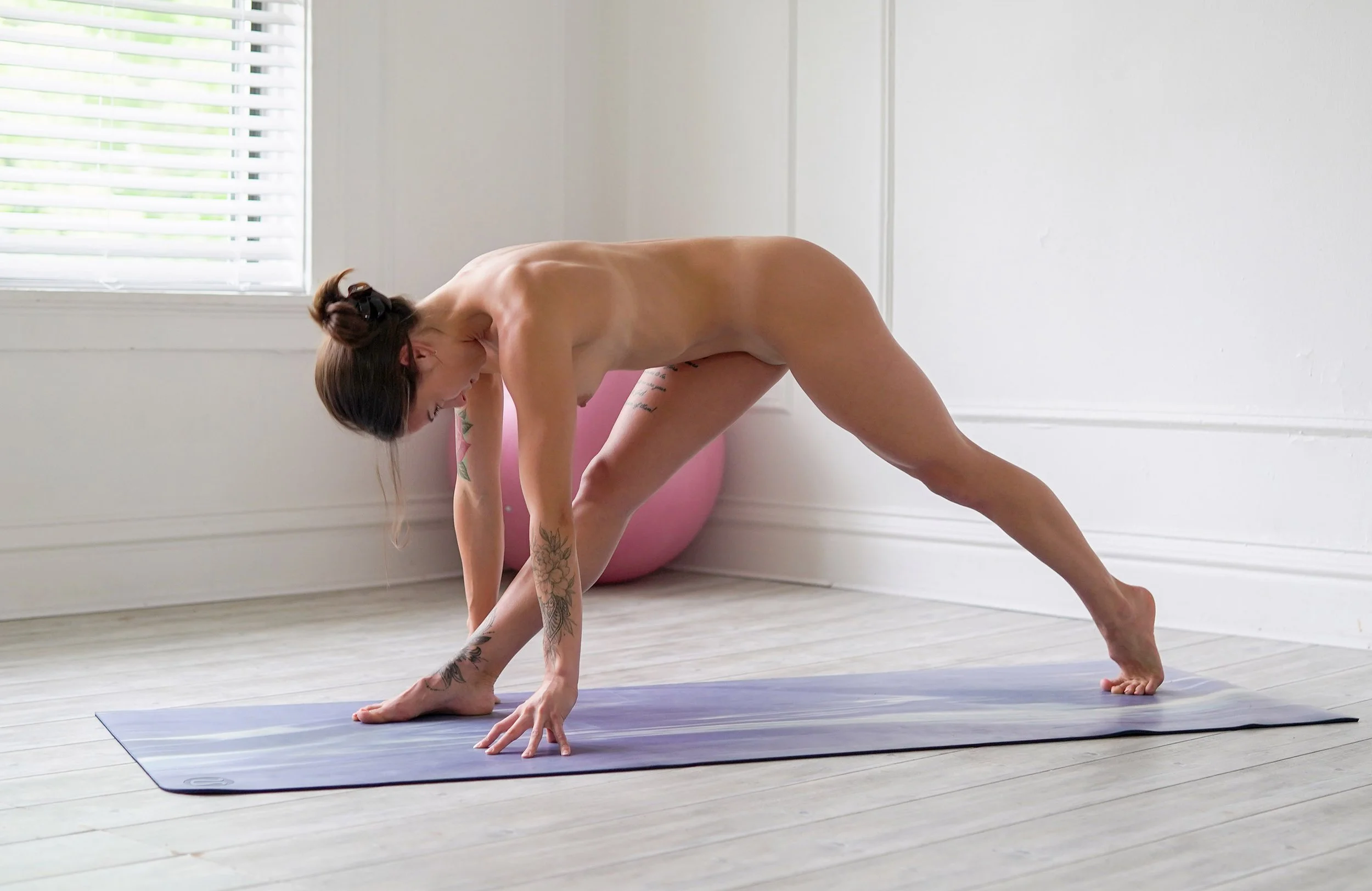
Make the habit practical with a simple weekly structure
If you want these habits to clearly expose stress patterns, keep it simple.
Habit: pick two full-length sessions per week
Choose two Full-Length Nude Yoga Classes or longer Flexibility & Stretching Videos sessions and repeat them weekly for a month. Repetition makes patterns visible.
Habit: add one short reset session on high-stress days
On days when stress feels heavy, do a shorter naked stretching workout session as a nervous system reset. The goal is not progress. The goal is relief.
Habit: journal one sentence after each session
Write one line: Where did I grip today? Jaw, shoulders, hips, hamstrings, low back, or breath. This tiny habit turns stretching into a stress awareness practice.
What to do when stretching exposes discomfort
If stretching reveals sharp pain, numbness, or tingling, stop that movement and consider professional guidance. A stretch should feel like intensity, not danger. The purpose of this practice is awareness, not pushing through.
For normal discomfort, treat it like information. Your body is not failing, it is communicating. Stress shows up as guarding, breath changes, and emotional impatience. When you see those signals, you can work with them instead of ignoring them.
Closing thought
Stress is not only in your mind. It is in your breath patterns, your tension habits, and the places your body refuses to soften.
A consistent naked stretching workout practice brings those patterns into the light. Once you can feel where stress lives, you can stop carrying it unconsciously.
Find your next honest practice session on Audriasana.live.