The Healing Power of Walking Nude in Nature
There is something profoundly transformative about stepping into nature without the layers we usually hide behind. Clothing protects us, expresses us, and shapes how we move through society. But it can also act as a barrier between our bodies and the living world. When we remove it in a safe, private, and intentional setting, we often discover something ancient and healing: a direct relationship between skin and earth.
Being nude in nature is not about exhibition or provocation. It is about returning to simplicity, breathing, sensing, and adapting. This practice, when approached with respect and awareness, can nourish the mind, strengthen the body, and soothe the soul in ways that feel both primal and deeply modern.
Reclaiming the Body: Freedom From Conditioning
From an early age, many of us absorb messages about what bodies “should” look like. Over time, this conditioning can create a quiet tension between how we inhabit our bodies and how we believe they are perceived. Standing nude in the open air disrupts that narrative. Just wind, sunlight, cool air, and the steady rhythm of breath.
In that setting, the body becomes less of an object to evaluate and more of an instrument to experience. You feel goosebumps when a breeze passes. You feel warmth spreading across your shoulders in sunlight. You feel your feet gripping soil or stone. The focus shifts from appearance to sensation. And in that shift, a subtle healing begins.
Skin as a Sensory Organ
The skin is the body’s largest organ, designed for contact and communication. Yet in daily life, it is often insulated from natural elements. We move from climate-controlled homes to cars to offices, with minimal exposure to temperature shifts, wind, or natural textures.
When skin meets nature directly, sensory awareness heightens. The coolness of grass. The firmness of sand. The dampness of morning air. The tickle of a passing breeze. This stimulation activates nerve endings that feed information to the brain, grounding attention in the present moment. In a world saturated with screens and mental noise, this direct sensory input acts like a reset.
Many people report that after even a short time nude outdoors, they feel calmer, more embodied, and less fragmented. Their thoughts slow. Their breathing deepens. It is not mystical. It is biological. The nervous system thrives on authentic sensory experience.
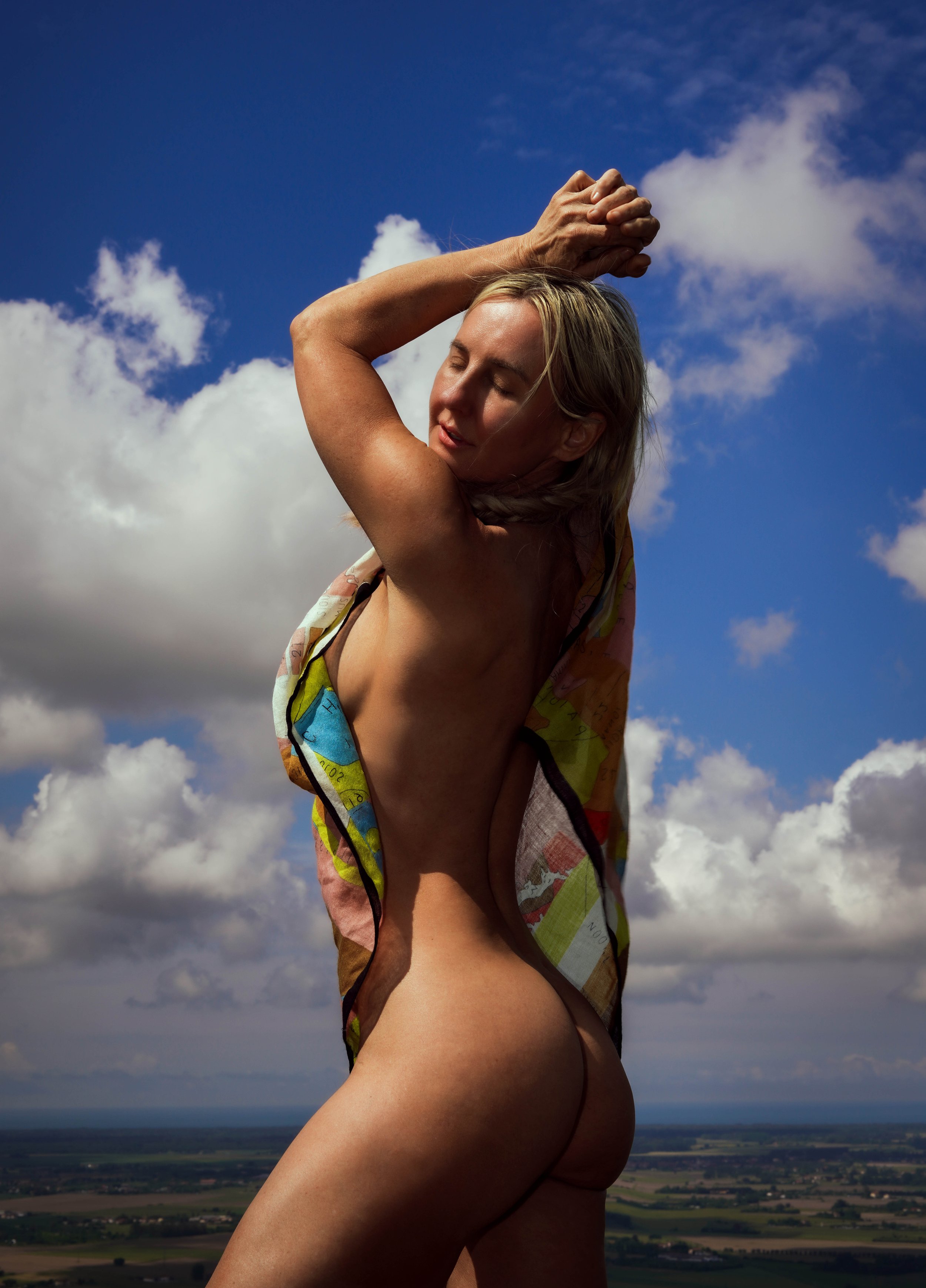
Asana on a hiltop overlooking Pisa, Italy onlyfans.com/sprytly
Nervous System Regulation and Stress Reduction
Modern stress is often mental: deadlines, notifications, performance expectations. Nature regulates the nervous system. Time outdoors has been linked to reduced cortisol levels and improved mood. When you combine that with the vulnerability and honesty of nudity, something even deeper can occur. There is a subtle courage in removing your layers outdoors. That courage engages awareness. Awareness invites presence. Presence soothes the nervous system.
Without fabric between you and the air, your breath becomes more noticeable. The rise and fall of your ribs feels immediate. Sunlight warms you evenly. You may instinctively stand taller or move more deliberately. These shifts encourage parasympathetic activation—the “rest and digest” state where healing and recovery occur. The body remembers that it is safe. And safety, at its core, is healing.
Movement in Its Most Natural Form
When we move nude in nature, movement often becomes more fluid. Clothing shapes how we hold ourselves. Waistbands, straps, and seams create subtle restrictions. Once they are gone, the body can move freely. Imagine lifting your arms to the sky with no fabric pulling at your shoulders. Imagine folding forward and feeling air across your back. Imagine kneeling on warm earth, grounded and unfiltered.
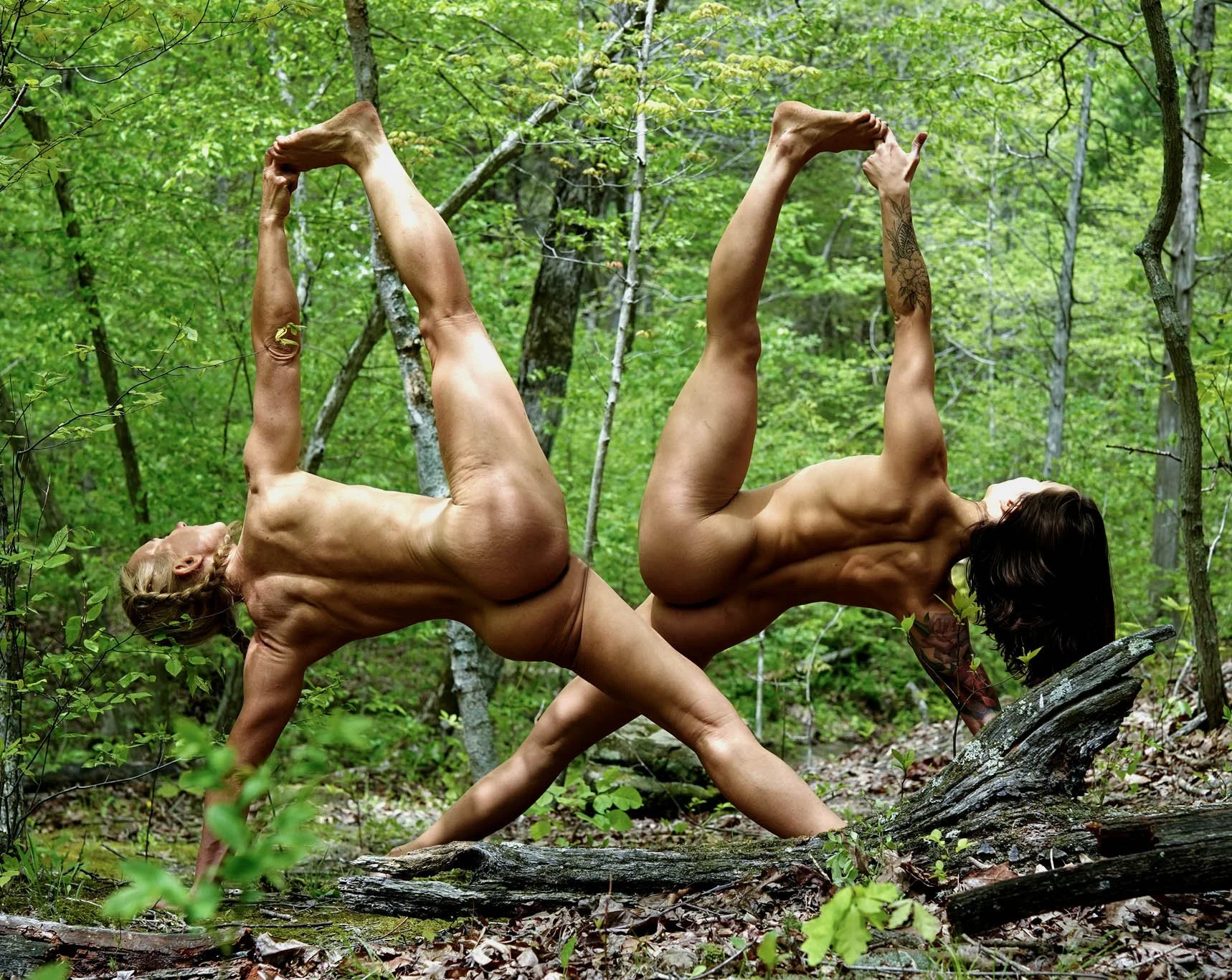
Movement becomes less about aesthetics and more about sensation. You are not performing; you are experiencing. Many people find that their posture improves naturally. They become more attuned to alignment because there is no buffer for feedback. Muscles engage with clarity. Balance sharpens. In this way, nude movement in nature becomes a dialogue between body and environment—a conversation of pressure, temperature, gravity, and breath.
The Psychology of Vulnerability
Vulnerability is often associated with emotional exposure. But physical vulnerability can mirror that emotional openness. Being nude outdoors is a choice of honesty. There is nothing to hide behind. That choice can feel confronting at first.
Yet as moments pass, vulnerability transforms into empowerment. You realize the sky does not judge. The trees do not evaluate. The earth does not critique your shape or scars. Nature responds to you as a living being, not a curated image. This realization can dissolve layers of internalized shame. It can soften self-criticism. It can cultivate compassion toward yourself. And when you experience your body as part of the natural world rather than separate from it, self-acceptance often deepens.
Sunlight, Air, and Elemental Connection
Humans evolved in direct contact with the elements. Sunlight supports vitamin D production and circadian rhythms. Fresh air improves oxygenation and mental clarity. Even mild temperature variation stimulates adaptive responses in the body. You feel warmth spreading across your skin rather than only across covered areas. You sense the contrast between shade and light more distinctly. You become aware of how quickly your body adapts to temperature shifts.
This awareness fosters resilience. It reminds you that the body is capable, intelligent, and responsive. Rather than being fragile or something to manage constantly, the body becomes a partner in experience.
Dissolving the Divide Between “Human” and “Nature”
Many modern lifestyles create a psychological divide: we see ourselves as separate from nature, visitors rather than participants. Being nude outdoors gently dissolves that boundary. Without clothing as a cultural marker, you are simply another mammal under the sky. Your skin mirrors bark and stone in texture. Your breath syncs with the wind. Your heartbeat aligns with the quiet rhythm of the environment.
This perspective can be profoundly humbling. It reframes identity. You are not just a role or a job title; you are a living organism within a vast ecosystem. That awareness often brings gratitude. And gratitude, in turn, nourishes mental and emotional well-being.
Rebuilding Self-Trust
Spending intentional time nude in nature requires mindfulness: choosing a secluded location, respecting the law, protecting your skin, and monitoring weather conditions. In doing so, you practice discernment and self-responsibility.
You check in with your body. Are you comfortable? Warm enough? Hydrated? You adjust accordingly. This process rebuilds self-trust. You become attentive rather than distracted. Responsive rather than reactive. When you trust your body and your decisions in simple, embodied experiences, that trust carries into other areas of life, relationships, work, and creativity.
A Ritual of Presence
At its heart, being nude in nature can become a ritual of presence. It does not need to be elaborate. It might be as simple as stepping into a private garden at dawn, removing your clothing, closing your eyes, and breathing for five minutes. It might be a quiet hike to a secluded beach where you stand at the shoreline, feeling water lap against your ankles.
Or stretching beneath trees, noticing how your body mirrors their rooted strength and flexible branches. Ritual invites intention. Intention deepens experience. And deep experience nourishes the soul.
Healing the Mind
Nude presence in nature simplifies the sensory field. There are fewer artificial inputs and more organic ones. Birdsong replaces notifications. Wind replaces traffic noise. The mind shifts from problem-solving mode to awareness mode. Thoughts slow and expand. Creativity often surfaces. Insights arise unforced. Many people describe a sense of mental “clearing” after such experiences. This clarity is not accidental. It is the result of attention returning to the body and environment rather than spiraling internally.
Healing the Body
Physical healing is multifaceted, but certain elements are clear: relaxation supports recovery, improved circulation supports vitality, and movement maintains strength and flexibility. Time spent in nature often encourages gentle, intuitive movement, stretching toward sunlight, squatting to touch the ground, and walking barefoot across varied terrain. Barefoot contact, when safe, stimulates foot muscles and enhances proprioception. Open-air exposure can improve posture awareness. Deep breathing in fresh air enhances oxygen exchange.
While it is not a replacement for medical care, this practice can complement a healthy lifestyle by reminding the body of its innate adaptability.
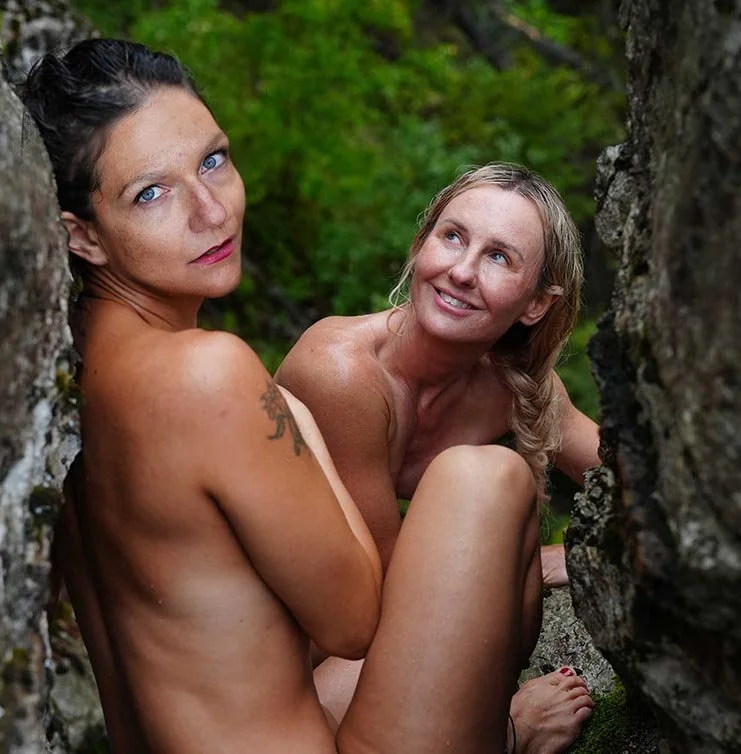
Sasha and Asana in Nude in Nature workout in Montana onlyfans.com/sassy.yoga77
Healing the Soul
Perhaps the most subtle transformation occurs on a spiritual level. When you stand unclothed under an open sky, you may feel small but not insignificant. You may feel exposed but not unsafe. You may feel simple but not diminished.
There is a quiet reverence in recognizing that your body is not separate from the earth beneath you. This recognition can cultivate awe. And awe has been linked to increased well-being, compassion, and life satisfaction.
In that sense, nude presence in nature becomes less about the body and more about belonging.
Returning to Simplicity
In a world that constantly encourages us to add more clothing, more status, more noise, there is something radical about subtraction. Remove the layers. Remove the expectations. Remove the constant self-monitoring. Stand in the elements as you are.
Feel the earth beneath your feet. Feel the air on your skin. Feel your breath moving in and out without effort. The mind quiets. The body softens. The soul expands. And for a moment, you are exactly what you have always been: a living being, whole and at home in the natural world.
Find your next honest practice session on Audriasana.live.